Japan

แสดงบทความที่มีป้ายกำกับ Travel แสดงบทความทั้งหมด

วันศุกร์ที่ 15 สิงหาคม พ.ศ. 2551

Hot Springs


Hot Springs


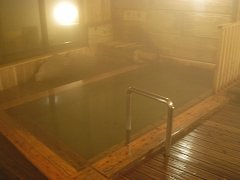
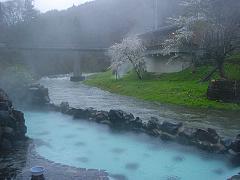
Natural hot springs (onsen) are numerous and highly popular across Japan. Every region of the country has its share of hot springs and resort towns, which come with them.
There are many types of hot springs, distinguished by the minerals dissolved in the water. Different minerals provide different health benefits, and all hot springs are supposed to have a relaxing effect on your body and mind.
Hot spring baths come in many varieties, indoors and outdoors, gender separated and mixed, developed and undeveloped. Many hot spring baths belong to a ryokan, while others are public bath houses. An overnight stay at a hot spring ryokan is a highly recommended experience to any visitor of Japan.

OSAKA CASTLE

Osaka Castle

OSAKA CASTLE
Osaka Castle is Osaka's most famous landmark. The gardens around Osaka Castle are very popular in cherry blossom season.
Osaka Castle (大阪城 Osaka-jō) a Japanese castle, Osaka's best known sight, although it's a concrete reconstruction that pales in comparison with, say, Himeji Castle. Still, it's pretty enough from the outside, especially in the cherry blossom season when Osakans flock to the castle park to picnic and make merry. Open 9:00 AM to 5:00 PM daily, adult admission ¥600 (Children up to middle school free). Closed at the end and beginning of the year. The park can be accessed on a number of lines, but the castle is closest to Osaka-jo Koen station on the JR Osaka Loop Line.

Cannon - Osaka Castle

Okinawa Island


Beautiful beaches are the most attractive feature of Okinawa to travelers. I will introduce you to the beautiful Okinawa beaches and interesting islands in the Okinawa prefecture. Okinawa is the southmost prefecture of Japan and consists of nearly 150 islands, which are scattered in a wide area.
Okinawa Island
There are three popular beaches on the west side of Okinawa Island. They are called Moon beach, Manza beach, and Okuma beach. Manza beach is the most popular. It is about a one and a half hour drive from Naha-city. Don't miss the view of Monza-mou, which is a famous cliff made of coral reef. The beaches of Okinawa Island are open from April to October. Manza beach Hotel is a luxury hotel in Manza. There is a good diving point in Manza.
Iriomote Island
This is the second largest island in Okinawa. It's located west of Ishigaki Island and takes about one hour by ferry from Ishigaki Island. This island is covered by tropical and subtropical forest and is known as the "mystery land of Japan". There are many unusual species of plants and animals on this island, such as the Iriomote Lynx. River tours through the jungle are a popular attraction. There is star-shaped "sand" on the Hoshisuna-no-hama Beach. The "sand" is actually the tiny skeletons of sea creatures, but it resembles grains of sand. Star sand is said to bring happiness and makes a very popular souvenirs.

Japanese Tea Ceremony


Japanese Tea Ceremony


Article by: Susan Paterson, February 2008
While touring the maple-bloomed gardens and incense-filled temples of Nara and Kyoto, cities steeped in the residue of an older way of life, you'll often get the opportunity to partake in tea and cake. The idea of this quite naturally evokes thoughts of ease and contentment. The experience for the uninitiated, however, can be a little more complex. Seemingly simple acts such as taking tea can prove daunting for those unfamiliar with the requirements of Japanese etiquette and floundering for a way in.
Although the average foreigner is by no means expected to be an expert in ceremonial nuances, uncertainty about what to do can induce anxiety. You may find yourself muttering questions such as: how do I sit on the tatami mat? How low should I bow? Which way do I hold the tea cup? Should I slurp, and how loudly? Above all, how do I eat the cuter-than-cute pink sweet-bean cake in the shape of a rabbit with that small stick?
How do I eat the cuter-than-cute pink sweet-bean cake in the shape of a rabbit with that small stick?
A great way to engage more deeply with the significance of the tea offering without the stress and embarrassment is to enrol in a short course on formal tea ceremony - chadō (literally 'the way of tea') - when you arrive in Japan. A lesson will typically involve an introduction by an instructor to the significance of chadō (perhaps using gorgeous handmade models of teahouses), the three levels of bow (ranging from formal to informal), and the consideration given to the calligraphy, ceramics, ikebana and kimono chosen for the ceremony.
Traditional, formal ceremonies use matcha, a bitter, vibrant, powdered green tea. The matcha is prepared using hot water that is poured using a hishaku (bamboo ladle) into the chawan (tea bowl) where a scoop of powdered tea has been added. It is then whisked briskly with a chasen (bamboo whisk).
Your instructor will show you how the tea is made, introduce you to the intricate cleansing rituals and offer you the chance to make some tea yourself. Each action - the ladling of the water into the bowl, the requisite number of quarter turns made of the bowl (both before drinking and after), the number of sips taken to finish the tea (three and a half) and the art of the appreciative slurp - is choreographed and fascinatingly precise.

A traditional Japanese teahouse
Always remove your shoes before you enter the teahouse and, once inside, kneel on the tatami mat. The cup is placed on your open left palm, and held and turned with your right hand. The most decorative part of the cup ought to face away from you and towards the host as you drink. Your audible final half-slurp will let your host know that you're done.
Your audible final half-slurp will let your host know that you're done.
Sweets are eaten before the tea to alleviate some of its astringency. They will sometimes be delicate sugary flower shapes or other attractive designs. The Japanese version of a cake to be served with tea is made of sweet bean paste, comes in numerous shapes, sizes, colours and flavours, and is delicious. Slice it into sections with the small piece of bamboo that looks similar to a knife and then spear it (as you would with a toothpick) to eat it.
At the heart of the ceremony are the principles of harmony, tranquillity, purity and respect. It was once the domain of Zen Buddhist monks, who employed it as a spiritual ritual. Gradually, over the centuries, it became available to all ranks of society. Teahouses were traditionally built with a small door raised off the ground so that samurai, the highest order, would be forced to

bow and remove their swords to enter.
The tea ceremony is a complex ritual that takes years, often a lifetime, to learn. In addition to the precise preparation, serving and sharing of tea, the elements of kimono, calligraphy (usually in the form of a hanging scroll), flower arrangement and ceramics are all significant. A tea master must be versed in each of these disciplines.
Once equipped with a little chadō know-how, however, you'll probably find your tea-drinking companions will be open to sharing some of their insider tips, and you'll feel much more at ease over your matcha and pink sweet-bean rabbits.
วันศุกร์ที่ 25 กรกฎาคม พ.ศ. 2551

Travel Japan – Enjoy the Adventure

Travel Japan – Enjoy the Adventure Japan is one of the Asian cities that must be seen. It is simply breathtaking to behold in its scenery and full of fun and exciting things to experience. Many come to the Islands of Japan and find they have so much to do, it is impossible to pack it all in to one vacation. From the large amount of attractions, the rich colorful history, and the beauty of the land itself, there is something to appeal to every traveler. You can still see the past traditions mingled with the new ways of today. There are so many cities in Japan that one might find it hard to decide on an exact destination. Each city has its own special personality to consider. Tokyo, Kyoto, Hiroshima, Osaka, and Fukuoka are some of the more polar cities most world travelers have heard of. Tokyo is the most up to date city in Japan and has sites to see such as the Meiji Jingu Shrine, the Imperial Palace, and Disneyland Tokyo.Other sites around Japan include the Nijo Castle, The Golden Pavillion, Kyoto Imperial Palace, and The Museum Of Kyoto. Hiroshima is, in itself a historical place as it was the area to be destroyed because of the first atomic bomb. The list continues on and on of great places to see and great things to experience while here in Japan. For those who want a more detailed list of thing you can do, the list below should give you a pretty good idea. • Try meditating at one of the many Buddhist Temples in the area.• See Sumo Warriors wrestle it out in this ancient sport.• Be a part of a tea party which is tradition in Japan.• For the adventure seeker, a climb up Mount Fuji might be the right activity.• Smell the Cherry blossoms on the tree.• Fish in one of the great waters here.• Have some authentic sushi and wash it down with real sake. • Take part in one of the many festival through the city. There are too many great things to do on your vacation in Japan. The best thing to do is to plan in advance. But if you’re the adventuress type, you can simply buy your tickets and set off for your own personal experience to Japan. See what you can find to do in this magnificent area of the world.

if you would like to learn more about Tokyo tours and traveling to Japan please visit Travel Japan
Article Source: http://www.ArticleBiz.com