Japan

แสดงบทความที่มีป้ายกำกับ Japan แสดงบทความทั้งหมด

วันอาทิตย์ที่ 17 สิงหาคม พ.ศ. 2551

Seafood


Seafood

Tourists are attracted from all over the country to Hokkaido's rich variety of fresh fish and processed seafood. This delicious bounty includes crab, scallops, sea urchins, salmon roe, salmon, herring, flounder, cod, arabesque greenlings, squid, octopus, shrimp, abalone, surf clams and kelp. Harvested from the northern seas, these seafood products have exquisite taste and flavor, and are rated among the best of their type. The crab in particular is exceptional. Depending on the season and location, you can enjoy Queen crab, Horsehair crab, Red king crab or Blue king crab. When in season, they are heavy for their size and rich in flavor whether boiled in brine or prepared as sashimi. The sea urchins feed on kelp and the sashimi is so delicious you must try it at least once. You will not find such rich and mellow sweetness anywhere but in Hokkaido. We recommend visiting one of the markets where you can eat fresh food on the spot. There are restaurants that provide reasonably priced samples of unique seafood, such as donburimeshi or a bowl of rice topped with a generous amount of sea urchins, salmon roe or scallops.

Himeji-jo Castle


Himeji-jo Castle

A classic example of Japan's beautiful castle architectureThe world of bygone days still lingersLatest Topics

Roppongi, with International Atmosphere
The World's Biggest Electrical Town, Akihabara
Registration at Lodging Facilities Changed
Flash Photo Report of the 2005 EXPO, Aichi
-->
Hyogo prefecture
Because its pure white appearance with white plaster coating looks like a dancing Shirasagi (Egret) with wings spread, this famous castle is also called the "Shirasagi-jo" or "Hakuro-jo". It was spared from damage during the war and from many other disasters and is in a remarkably preserved state compared to other castles. Seventy-four structures within the castle site including a tower and gate are designated as important cultural assets of Japan.The year of establishment was 1346. Later, the warlord Toyotomi Hideyoshi (1536-1589), who ruled over most of Japan, built a full-scale castle wall, which became the base for present-day Himeji-jo. At the start of the Edo period, the castle underwent considerable renovation over a 9-year period to create the magnificent appearance we see today.If you are confident in the strength of your legs and back to climb up and down, you should take a look around the inside of the castle. Clearly, beauty was not the only priority of those in power throughout the ages. Its complicated structure, particularly the three tall watchtowers connected by columns and winding maze-like passages, functions well as a war fort and conceals a mechanism to halt the invasion of enemies and throw them into confusion. The design is intended to prevent access to the tallest watchtower and castle keep, situated at the heart of the castle, which functions as a center, so beware if you go there without a map, you may get lost!
Among the many gates are the remains of gate mechanisms for dropping stones on the enemy if they manage to enter, or gates with an extremely narrow passageway so that not many people could pass at once. Numerous holes to shoot from are made in the castle wall and there are windows from which to drop gigantic stones on the enemy, too. It is very interesting that there is a kitchen in the inner court in case the castle falls under siege or an attempt is made to starve out the occupants. By the way, the thick coating of white plaster on the outer surface is not just there for aesthetic purposes but also for defense, because of its excellent resistance to fire and bullets.The castle keep rising from the peak of Mt. Hime-yama is built with a total height of 32 m on a stone wall approx. 15 m high, and the view from the top of the keep is spectacular. On a fine day, you can imagine the emotions of a feudal warlord with his ambitions to dominate the whole country. At night, the entire castle is lit up, so a visit after sunset is highly recommended as well.Himeji City, Hyogo prefecture

Gusuku Sites and Related Properties of the Kingdom of Ryukyu


Gusuku Sites and Related Properties of the Kingdom of Ryukyu


Ruins of the main island of Okinawa wherethe influence of Japan, China and the Korean Peninsula still lingersLatest Topics

Okinawa prefecture
Cultural heritage sites are scattered among the southernmost islands of Japan and on the main island of Okinawa. There are 9 ruins symbolizing the unique culture and religious beliefs of the Kingdom of Ryukyu that once flourished here.In Okinawa, dictatorships began to arise in various areas from around the twelfth century, and castle-like buildings called "Gusuku" were constructed. However, these buildings were not like Himeji-jo Castle, which is registered as a world heritage site as well, but more like a fort. Gusuku were also treated as sacred sites under local religious belief. When the 14th century came along, each area was unified into three counties and the unified Kingdom of Ryukyu was finally established in 1429. In line with this, the symbol of the Kingdom "Shuri-jo Castle" became the sole Gusuku.
Shuri-jo is built on upland 120 m above sea level overlooking Naha City. The castle area surrounded by stone walls approx. 10 m high is 400 m east to west and 270 m north to south. Inside the castle, there is an open space and facilities for political, cultural and diplomatic activities and festivals, and the largest wooden structure in Okinawa "Shoden (central building)" was built on the castle premises. This building shows a strong influence from various cultures including from Japan and China, which proves that trade with Asian countries was very active at the time. The pattern of dragons or vermilion lacquer coating shows the influence of China, and the structural form of the roof shows the influence of Japan. Shurijo was completely destroyed in World War II and most of the present buildings are reproductions built up until 1992. Because this place is used as a location for TV dramas, it attracts many tourists.On the west side of Shurijo is a massive stone structure, "Tamaudun", created using a natural rocky outcrop. This is the tomb of the successive royal families of the Kingdom of Ryukyu, and the inside of the tomb is paved with coral reef fragments, and at the center of the structure and in the east and west towers stand lion statues called Shisa, which are a symbol of Okinawa and a charm against evil.Naha city, Chinen village, Nakagusuku village, Kitanakagusuku village, Katsuren town, Yomitan village, Nakijin village, all on the Okinawa Main Island in Okinawa prefecture

วันศุกร์ที่ 15 สิงหาคม พ.ศ. 2551

Hot Springs


Hot Springs


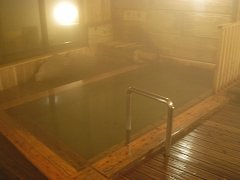
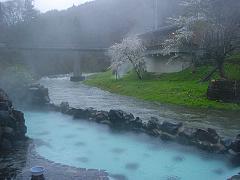
Natural hot springs (onsen) are numerous and highly popular across Japan. Every region of the country has its share of hot springs and resort towns, which come with them.
There are many types of hot springs, distinguished by the minerals dissolved in the water. Different minerals provide different health benefits, and all hot springs are supposed to have a relaxing effect on your body and mind.
Hot spring baths come in many varieties, indoors and outdoors, gender separated and mixed, developed and undeveloped. Many hot spring baths belong to a ryokan, while others are public bath houses. An overnight stay at a hot spring ryokan is a highly recommended experience to any visitor of Japan.

OSAKA CASTLE

Osaka Castle

OSAKA CASTLE
Osaka Castle is Osaka's most famous landmark. The gardens around Osaka Castle are very popular in cherry blossom season.
Osaka Castle (大阪城 Osaka-jō) a Japanese castle, Osaka's best known sight, although it's a concrete reconstruction that pales in comparison with, say, Himeji Castle. Still, it's pretty enough from the outside, especially in the cherry blossom season when Osakans flock to the castle park to picnic and make merry. Open 9:00 AM to 5:00 PM daily, adult admission ¥600 (Children up to middle school free). Closed at the end and beginning of the year. The park can be accessed on a number of lines, but the castle is closest to Osaka-jo Koen station on the JR Osaka Loop Line.

Cannon - Osaka Castle

Master of the Bunny Slope


Master of the Bunny Slope


Article by: David Weber, November 2005
David Weber reveals what can happen when English teachers go snowboarding in Japan.
Spring has come to Japan and winter has been pushed out the seasonal door. And I say good riddance for even though I like winter and snow, I'm afraid I might be tempted to try snowboarding again if winter were to last any longer. Weeks after the attempt I still feel aches and pain from this self-inflicted Spanish Inquisition of Winter Sports.
Whose sadistic idea was this anyway to make what was obviously some kind of torture method from medieval Switzerland into a sport?

I went to Echigo Yuzawa in the Niigata Prefecture last month. Being a Southern it seemed strange to me to engage in winter sports at the end of March. Our snow generally comes discreetly in December and has the common sense and decency to depart by the end of February with the exception of a few rude snowstorms. With the aid of the shinkansen, the Japanese bullet train, one can leave spring's domain in Tokyo and be knocking at winter's door within an hour. Some slopes in the Japanese Alps and the northern region Tohoku will often stay open till the beginning of May though skiers may find themselves fighting over remaining patches of slushy snow.
I went with three fellow English teachers from work and one of the receptionists from our school. One of the teachers and the receptionist had snowboarded before. The rest of us were rank-amateurs. I had at least skied a few times. Luke had skied once when he was 11. Martin had never skied or snowboarded before.
The coats and pants we rented were less padded than we expected or would have liked. Joseph, our snowboarding expert, said not to worry as this is was normal for snowboarders.

Fair enough but later in the changing room we found him applying all sorts of padding to his body.
"Uh, you didn't mention anything about bringing padding." one of us said to him.
"Don't worry! I'm sure you boys won't be needing it!" he said, perhaps a little too cheerily.
Martin was the first of us to go. He never even made it to the chairlift. He only got one foot strapped on the board before he went. We had been practicing how to stand properly on the board when Martin went down. All of us had been falling but Martin landed hard on his shoulder. So hard that he was in fact done for the day before he even got started for the day.
He was a good sport about it after the painkillers kicked in. He drank beer in the lodge all day and rode the gondolas while Luke and I were busy sliding down the mountainside on our faces.
Luke was the next of us to go. He sprained his wrist a little while later and switched to skis for the remainder of the day.
I had actually twisted a muscle in my back before I even got on the chairlift just trying to walk with the stupid board on my foot. Instead of joining Martin for beers in the lodge, my stupidity overrode my pain and I persevered so I could achieve more pain. I believe I succeeded admirably as I must have cracked a rib because it still hurts weeks later.
I remember how I used to hold snowboarders back home in such contempt when I had gone skiing in the past. I was a decent skier meaning a I could avoid trees and other skiers and actually get off the chair lift without falling over. But my beginner's skills were no match for dealing with inane snowboarders who were constantly either zipping wildly past or falling all over the place trying to copy some stupid stunt they saw on MTV last week.
As I struggled and fell down the hill, skiers would pass me with the same contemptuous sneer I once had for snowboarders
Now the board was on the other foot (though I had a hell of a time trying to get the other foot on it). As I struggled and fell down the hill, skiers would pass me with the same contemptuous sneer I once had for snowboarders.
I was quite in impressed with the Japanese skiers and snowboarders. They were very polite and aware of their surroundings. They were able to gracefully move out of harm's way whenever an out-of-control first-time gaijin snowboarder such as myself came tumbling by.
Japanese snowboarders are quite different than their North America counterparts. I saw very little in the way of stupid stunts that cocky snowboarders try to do back home. This is perhaps due to the fact that when snowboarding was first introduced in Japan, many slopes required a license in order to snowboard. Japan didn't want the type of hooligan snowboarder that was often a prevalent nuisance in other countries.
The Nagano Olympics in 1998 first introduce snowboarding as an Olympic sport thus propelling its popularity in Japan. Nowadays you find snowboarders to be of all different ages and backgrounds.
I spent most of the morning braving the slightly inclined slope of the Bunny Slope. Whipping by at speeds that would have turned a tortoise's head, I eventually got a little better. I became confident. I became cocky. I became: The Master of the Bunny Slope.

I should have stayed there but no! I had to listen to Joseph's advice to try the tougher slopes. I realize now that Joseph wasn't going to be satisfied until everybody was badly hurt.
On the higher slopes I found I was no longer the Master of the Bunny Slope. I was the Rank Novice of the Beginner Slope and the Chicken of the Intermediate Slope. The Expert Slope had all the allure to me that a piping hot bowl of chili has to a Legionnaire dying of thirst in the Sahara Desert.
As I tumbled down the mountain, the sharp blows to the head (did I mention Joseph had a helmet?) jarred an early childhood memory of an old ABC TV Sports World commercial. The commercial showed a scene of a runner winning a race as the words: "...the thrill of victory..." were spoken followed by: "and the Agony of Defeat!" The scene would then switch to a skier tumbling down, down, down a mountainside. In fact I think he is stilling falling. The Agony of Defeat I can handle, it’s the Agony of Falling (not too mention landing) that I have a problem with.
I realized that if I was knocked unconscious, I wouldn't have to listen anymore to the J-Pop music that was coming out the speaker system on every slope
I had one comforting thought, though, as I fell. I realized that if I was knocked unconscious, I wouldn't have to listen anymore to the J-Pop music that was coming out the speaker system on every slope.
Later, in an effort to keep my bones from becoming jelly, I devised a new technique on how to get down the mountain in one piece. Our receptionist, Mari, was stunned. She had never seen anyone snowplow all the way down a mountain before. And on a snowboard no less. I said never underestimate what cowardliness and necessity can come up with.
Mari was a very graceful snowboarder herself. She could glide off the chairlifts with the poise and grace of a petite Olympic ice skater. That is until one time I ran into the back of her and knocked us both flat on our backs. I'm sure that had nothing to do with the cracked rib she got.
By the end of the day, I had a body full of pain. My ribs hurt, my back hurt, my wrists hurt, my bum hurt, and my knees hurt. I felt like I had been the guest of honour at an all male orgy.
My first day of skiing I had left feeling sore but confident. At the end of my first day snowboarding, I felt only pain and more pain and deep suspicion of Joseph who alone of us escaped injury.
All I can say is, thank God spring is here!

วันเสาร์ที่ 9 สิงหาคม พ.ศ. 2551

Mitakesan (Mount Mitake)

Mitakesan (Mount Mitake)

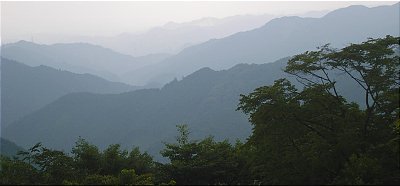
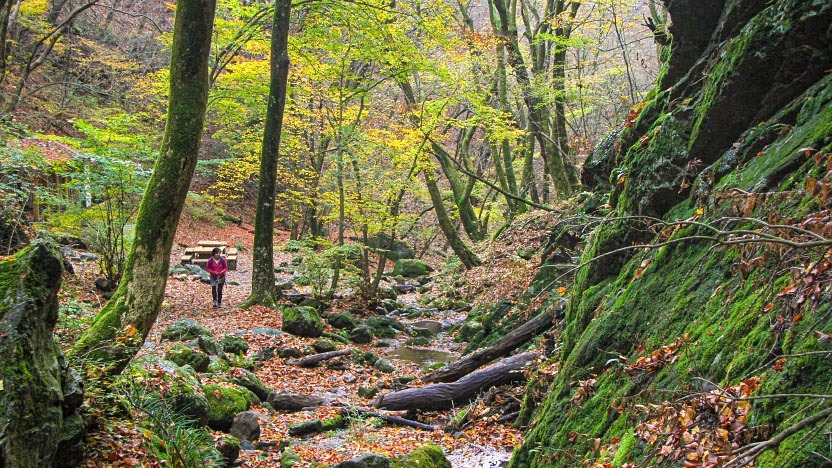
Mount Mitake (Mitakesan) is one of the many highlights of the Chichibu-Tama-Kai National Park, which covers more than 1250 square kilometers of forested mountains, hills, gorges and some rural towns in the prefectures of Yamanashi, Saitama, Nagano and Tokyo.
Besides a popular shrine, Mount Mitake offers various walking and hiking opportunities in virtually unspoiled nature. Located in the Okutama region, the westernmost part of Tokyo, the mountain can be reached in less than two hours from central Tokyo, and is accordingly popular among people looking for a break from the city.

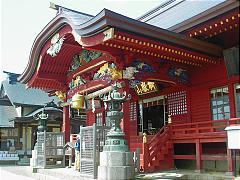
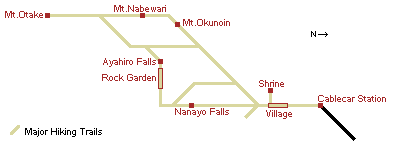
From the upper station of the Mitake Cablecar it is a 20-30 minute walk to the Musashi-Mitake Shrine on the mountain's summit (929 meters). On your way, you will pass a small village with many Japanese style inns and souvenir shops, which have been catering to visitors and pilgrims to Mount Mitake for centuries. It is believed that Musashi-Mitake Shrine has been serving as a center of mountain worship for almost 2000 years.
From the shrine, you have various hiking options to neighboring peaks and valleys. Among the most beautiful destinations is the so called "Rock Garden", which, in fact, is a narrow, forested valley with a picturesque stream, lots of moss covered stones and two nearby waterfalls. It takes less than an hour to reach the valley from the shrine.


If you want to walk some more, it is another 40-60 minutes from the Rock Garden to the peak of Mount Otake (1267 meters), from where you can enjoy nice views of the surrounding, forest covered mountains on clear days. Some passages are quite steep, but do not require any advanced mountaineering tools. Sturdy shoes, however, are recommended.
An excellent hiking map, which shows the extensive network of hiking trails in the Okutama region, is available for free at the Mitake Visitor Center (closed on Mondays), halfway between the upper cablecar station and the shrine.


how to get there
From central Tokyo, e.g. Shinjuku or Tokyo Station, take the frequently departing, orange JR Chuo Line to Ome Station (75 minutes from Shinjuku). A few trains go all the way to Ome. Otherwise, a transfer of trains is required at Tachikawa (40 minutes from Shinjuku).
At Ome Station, change to another orange train on the JR Ome Line (usually waiting on the opposite platform of the arriving train) and ride as far as Mitake Station (20 minutes). The whole trip from Shinjuku to JR Mitake Station costs 890 yen one way and is fully covered by the Japan Rail Pass.
Once at Mitake Station, take the bus to the lower station of the Mitake cablecar (10 minutes, 270 yen one way, about 2 buses/hour). The cablecar lifts you to close to the summit of Mount Mitake (1090 yen roundtrip, about 3 departures/hour).

วันพฤหัสบดีที่ 7 สิงหาคม พ.ศ. 2551

2 Day Diet Japan Lingzhi: Premium Weight Thrashing Plan

2 Day Diet Japan Lingzhi: Premium Weight Thrashing Plan
2 Day Diet Japan Lingzhi burns about 96% more fat than compared to any other diet plan! A premium Japan Formula Lingzhi will lend a hand to you to not long for fat foods or sugary stuff, augment energy levels, enhance the metabolic rate and dissolve fat about 3 times faster.

You don't have to strike the gym to bring in these profits. 2 Day diet Japan Lingzhi that integrates multi-herbs Lingzhi Formula helps in the following processes:

1) reducing calories
2) sheds fat
3) Works together for your heart and muscle in the least sum of time.

That means you can acquire 2 capsules a day previous to or subsequent to a breakfast and you're all set to loose weight. The best part of it is that you will keep blazing additional calories all day long, even at the time while you settle down.

2 Day diet Japan Lingzhi has been designed to lend a hand to you so as to lose excess fat from the abdomen (and whatever thing that jiggles!) in least possible time and convey to you a swimsuit-sexy body in no time for seashore period.

Q) The reason why 2 day diet Japan Lingzhi diet is different from other diet plans.

One can think about it this way: severe diet is by no means good for you. You might drop several pounds, but you will drop your vigor in a procedure. To upsurge the metabolism we require healthy breakfast and food all the way through a day. But also, for a lot of us, it is not easy to keep segments small and drop calories fast and competently.

In an order to drop weight, we require to keep up the vigor level elevated. Lingzhi as the pinnacle health-advantageous herb known for several centuries will maintain you active, whereas the multi-herb superior formula Japan Lingzhi will liquefy down the fat from the most immovable areas. Increased proportion of Lingzhi in 2 Day Diet promises that you will drop more pounds rapidly and without even paying much attention to it.

Significant advantages of 2 Day Diet Japan Lingzhi:

• Increases breakdown of fat
• dominant antioxidant
• Maximum manage hunger suppressant
• strengthens healthy metabolic action
• augments the removal of metabolic waste and toxins
• eradicate free radicals and other resources of oxidative strain
• Protects in opposition to viruses, bacteria and fungi
• works as an vigor enhancer
• Restores, defends, and vitalizes your physical condition


Read more on Lida DaiDaihua. Check out the 2 Day Diet Japan Lingzhi.

Article Source: http://www.ArticleBiz.com

วันพุธที่ 30 กรกฎาคม พ.ศ. 2551

Japan Casinos

Japan Casinos
Japanese people love gambling and all kinds of games of chance, and although Japan casinos are not plentiful due to governmental regulation, gambling is very popular with Japanese and foreigners alike. The Japanese have a long history of gambling, often involving traditional games that are not known outside its borders, and furthermore, they love to bet on sporting events such as horseracing and baseball. Consequently, current political moves to liberalize the Japan casino industry are likely to place Japan at the forefront of the Asian gambling market.
One of the most popular games of chance in Japan is called pachinko, a game like pinball, which is played by millions of Japanese in "pachinko parlors" all through the country. Pachinko machines offer lucky winners the chance to exchange their tokens for goods or money on the premises, and trillions of yen are spent every year on this most popular of pastimes. Indeed, it is estimated that more money is generated by this game than several of Japan's top car manufacturers combined.
Due to tight government legislation prohibiting casinos as such, Japan casinos are currently obliged to operate online, an industry which is fast growing into one of Asia's biggest, and also on cruise ships and boats operating in international waters, thus circumventing the restrictions on land-based gambling. There are moves afoot to change the rules on gambling to allow Japan casinos to be established throughout the country, offering not just basic gambling facilities, but also operating as entertainment and retail malls in their own right. This will generate extra revenue and provide customers with a more satisfying leisure experience. Furthermore, many proponents of casino reform in Japan feel that liberalizing the rules on gambling would make the country even more attractive to tourists, especially considering the number of casinos operating in other countries in the Far East.
In addition to traditional forms of gambling, Japanese people love to wager on sporting events, and in particular on horse racing; big races can regularly attract huge crowds, sometimes in excess of 100,000. The Japanese also gamble on cycling and other sports such as soccer, and in addition, there is a government lottery that offers maximum prizes of around a billion yen. Consequently, there is already a thriving gambling scene in Japan, and with the anticipated changes in the rules, it is surely not long before Japan casinos find themselves at the forefront of the Asian gambling industry.

วันเสาร์ที่ 26 กรกฎาคม พ.ศ. 2551

Marketing to women – bigger buyers than all of Japan

Marketing to women – bigger buyers than all of JapanOk - I am the first to admit - I can get very confused on how women think, make decisions and end up purchasing one offer over another.But, I realize how important it is that I learn (especially considering I live with 3 of them! My wife Kari, and my twin daughters Katrina and Hailey). It is become of utmost importance to me to figure out how they think, or resign myself permanently to living and working out of the garage.And you should too - man or woman - you should start researching the how-to aspect of marketing to women.Why?According to the book I am reading right now entitled "Marketing to Women - How to understand, reach and increase your share of the worlds largest market segment" by Martha Barletta.Women make 85% of all buying decisions Women account for 70 percent of all new business startupsSpecifics... Homes furnishings purchases - 94% decided by women Vacations - 92% Houses - 91% Electronics - 51% Cars - purchase 60% and influence 90% Banking decisions 84% Health car - 80%I think you see the point here - by far this is the world's largest untapped market. And if you take the initiate to learn about this market - you will be happily growing your business while others stand by and look confused on how you are doing it.The American Women's market by themselves has more purchasing power than the entire Japanese market!Do I have your attention yet?Think about it. Most advertising, web sites, sales copy, sales trainers etc are focused on techniques that sell to men.Very few... name some... train others on effective marketing and sales techniques to the women's market.This is new to me too!Living with 3 women, you would think I understand this market - nope, I don't... but I want to learn.Women have an entirely different way of making their purchasing decisions... how they read sales copy and advertising... and how they perceive companies and their positioning.It is imperative that you learn this. Me as well.I am not going to get into the details here... for that... go buy a book written by an expert in this field.... but here is a few examplesWomen - like to see lots of information (long copy sells... but most do it wrong to the women's market), want to build rapport first, make internal connections and hear stories that they can relate toMen - are interested in the key points (bullets... not nearly as effective with women), like headlines, status is very important and appreciate facts and features (most high tech gadget freaks I know are menWomen seek the perfect answer; men just want a quick answer. Think about shopping habits of both. Men go to a mall with a specific purpose in mind (an answer), walk quickly through the mall straight to where they are going, buy... then leave.Women on the other hand can spend hours at the mall - seeking that perfect answer.And women will do anything to get exactly what they are looking for.You want raving fans? Learn how to market to women properly... they will treat you like gold in return. If you offer what they are looking for (the perfect answer), they are absolutely your perfect client - they will send endless referrals your way if you treat them right.So, do yourself, your relationships and your business a favor - pick up a copy of this book... start to understand where 98% of the businesses you see out there are doing it wrong... and reap the benefits for years to come.Gotta run - some serious reading and studying to do here!

Troy White, The Marketing Results Mentor and Expert Copywriter helps clients achieve HUGE growth surges in their business in very short periods of time. If you're an entrepreneur in need of quick cash flow surges - here is the quick-hit solution to put money in your bank&. The Wild West Wealth Summit! Make sure you visit http://www.WildWestWealth.com or sign up for the Free Cash Flow Surge Newsletter at http://www.CashFlowSurges.com
Article Source: http://www.ArticleBiz.com

วันศุกร์ที่ 25 กรกฎาคม พ.ศ. 2551

Travel Japan – Enjoy the Adventure

Travel Japan – Enjoy the Adventure Japan is one of the Asian cities that must be seen. It is simply breathtaking to behold in its scenery and full of fun and exciting things to experience. Many come to the Islands of Japan and find they have so much to do, it is impossible to pack it all in to one vacation. From the large amount of attractions, the rich colorful history, and the beauty of the land itself, there is something to appeal to every traveler. You can still see the past traditions mingled with the new ways of today. There are so many cities in Japan that one might find it hard to decide on an exact destination. Each city has its own special personality to consider. Tokyo, Kyoto, Hiroshima, Osaka, and Fukuoka are some of the more polar cities most world travelers have heard of. Tokyo is the most up to date city in Japan and has sites to see such as the Meiji Jingu Shrine, the Imperial Palace, and Disneyland Tokyo.Other sites around Japan include the Nijo Castle, The Golden Pavillion, Kyoto Imperial Palace, and The Museum Of Kyoto. Hiroshima is, in itself a historical place as it was the area to be destroyed because of the first atomic bomb. The list continues on and on of great places to see and great things to experience while here in Japan. For those who want a more detailed list of thing you can do, the list below should give you a pretty good idea. • Try meditating at one of the many Buddhist Temples in the area.• See Sumo Warriors wrestle it out in this ancient sport.• Be a part of a tea party which is tradition in Japan.• For the adventure seeker, a climb up Mount Fuji might be the right activity.• Smell the Cherry blossoms on the tree.• Fish in one of the great waters here.• Have some authentic sushi and wash it down with real sake. • Take part in one of the many festival through the city. There are too many great things to do on your vacation in Japan. The best thing to do is to plan in advance. But if you’re the adventuress type, you can simply buy your tickets and set off for your own personal experience to Japan. See what you can find to do in this magnificent area of the world.

if you would like to learn more about Tokyo tours and traveling to Japan please visit Travel Japan
Article Source: http://www.ArticleBiz.com